
Our Clients





Generative AI Development Services Cypherox Offers
We offer complete generative AI development, including consulting, model selection, RAG, fine-tuning, agent development, and integration. Our solutions use foundation models and your own data.
Generative AI Platforms
Why Cypherox is the Preferred Generative AI Development Company
Teams choose Cypherox for generative AI development because we design for production from the start, use your data to generate output, and include governance from the outset.
We Build Generative AI That Reaches Production
Most generative AI pilots never make it to launch. We focus on accuracy, speed, cost, and monitoring from the start, so our builds work for real users rather than remaining demos.
Grounded in Your Data, Not Open-Ended Generation
We base generative systems on your verified content using retrieval and evaluation. This makes answers traceable to your sources and ensures accuracy by design.
Model-Agnostic Architecture
We choose the model that best fits your accuracy, cost, and privacy needs rather than defaulting to a single provider, and we design it so you can switch models as the landscape shifts.
Governance and Compliance Built In
We set up guardrails, audit trails, and data handling rules early in the process. Our approach aligns with GDPR, HIPAA, SOC 2, and new AI regulations from the start.
You Own the Models, Code, and Data
You own everything we build, including fine-tuned models, pipelines, prompts, and source code. There’s no lock-in or ongoing need for our team.
Ongoing Optimization After Deployment
Generative systems may drift as data and models evolve. We monitor output quality and cost post-launch, performing regular optimizations to maintain consistent performance over time.
Projects
Featured Projects

Year
2020
Role
Mobile App Development
Description
Swiftlyst is a smart, cross-platform productivity app designed to help users organize, prioritize, and accomplish their tasks seamlessly across iOS and Android.
All Projects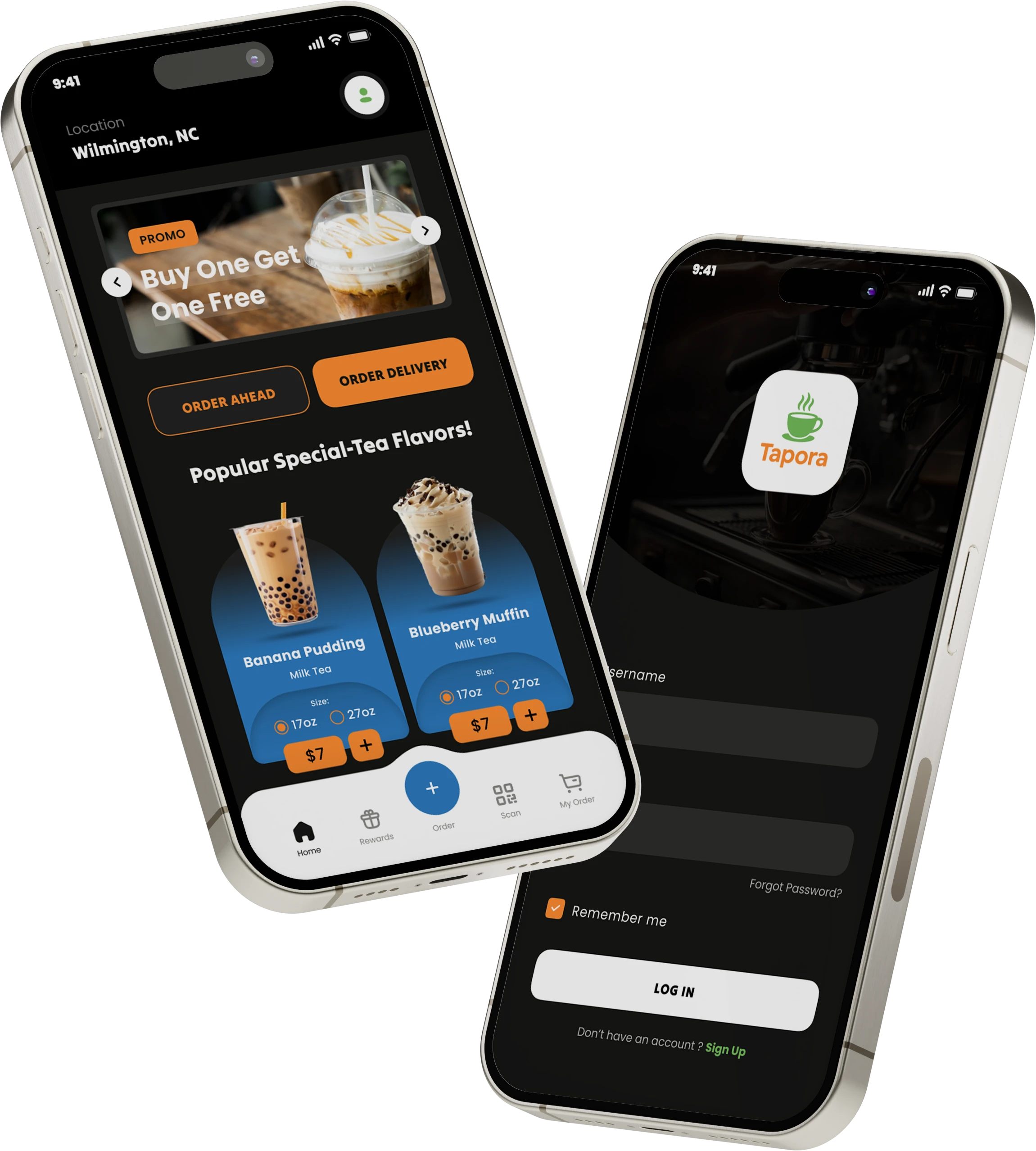
Year
2025
Role
Mobile App Development
Description
Tapora is a sleek, cross-platform mobile app built for both iOS and Android, designed to deliver a smooth, intuitive, and engaging user experience.
All Projects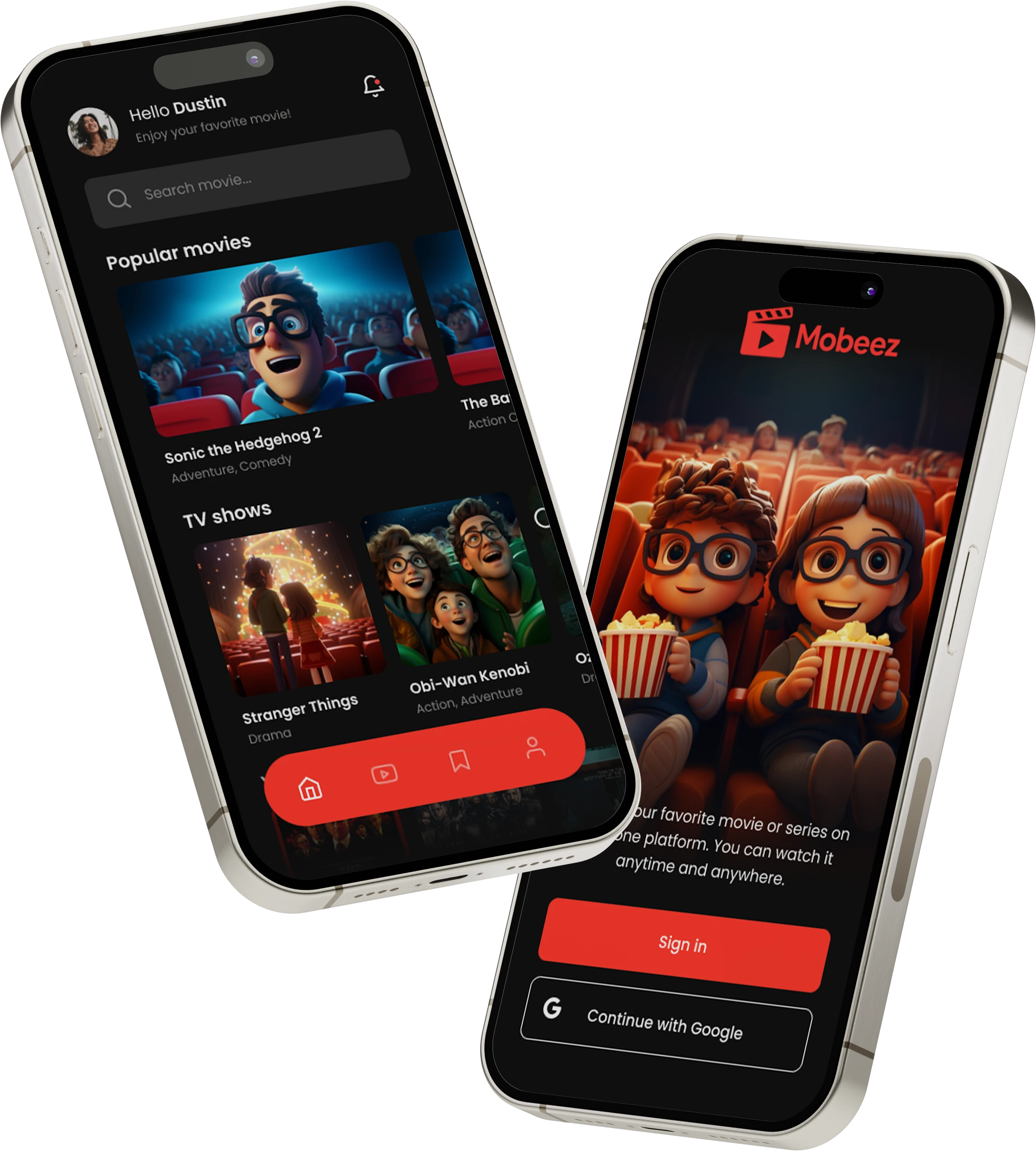
Year
2022
Role
Mobile App Development
Description
Mobeez is a dynamic, cross-platform mobile solution built to empower businesses with on-the-go service management and customer engagement.
All Projects
Tapora
Mobeez
Industries We Serve
We develop generative AI for sectors where output accuracy is critical, tailoring retrieval, guardrails, and compliance to each industry's requirements.






What Drives Your Generative AI Development Cost
Generative AI development costs depend on architecture, data readiness, model strategy, and compliance requirements. Below are the main cost drivers and typical investment ranges by project type. Book a consultation for a tailored estimate.
What Affects the Cost of Generative AI Development
01
Model strategy
Prompting a foundation model via API costs less than RAG, and RAG costs less than fine-tuning or training a domain-specific model.
02
Data readiness
Clean, organized content lowers costs. If your data is scattered or unlabeled, you’ll spend more on pipelines, chunking, and prep before development starts.
03
Accuracy and evaluation
The higher your accuracy needs, the more evaluation, guardrails, and human review are required, which increases the project scope.
04
Integration scope
Every connection to your platforms, CRMs, and data systems adds engineering time. Integration is often a bottleneck in generative AI projects.
05
Compliance and governance
Regulated projects need audit trails, access controls, documentation, and sometimes private or on-premises hosting if your data must stay in-house.
06
Inference and operational costs
Your ongoing costs depend on your model choice, token volume, and traffic volume. Early architecture decisions affect your monthly expenses.
Typical Investment Ranges by Project Type
| Project Type | Typical Investment Range | Timeline |
| Generative AI proof of concept | Approx. $15,000 to $40,000 | Approx. 4 to 8 weeks |
| LLM application on foundation models | Approx. $30,000 to $80,000 | Approx. 6 to 12 weeks |
| RAG system on your knowledge base | Approx. $50,000 to $150,000 | Approx. 3 to 6 months |
| Fine-tuned or domain-specific model | Approx. $60,000 to $180,000 | Approx. 3 to 6 months |
| Generative AI product (end to end) | Approx. $80,000 to $300,000 | Approx. 4 to 8 months |
| Enterprise generative AI program | Approx. $150,000 to $1,000,000+ | Approx. 6 to 18 months |
These ranges are estimates and depend on your model strategy, data readiness, accuracy targets, integration scope, and compliance needs. Inference and compute are billed separately and continue to be billed post-launch. Each project begins with a scoping call, followed by a detailed estimate within five business days.
Dedicated Developer
Tailored Talent Scaling: Hire Generative AI Developers to Accelerate Your Roadmap
If you need extra help instead of a full build, you can hire generative AI developers skilled in LLMs, RAG, and agentic systems. Choose from dedicated engineers, full teams, or targeted support. Book a consultation to talk about your needs.
Dedicated Generative AI Developers
Full-time engineers work only on your project, fit into your workflow, and report directly to you. This is best for ongoing generative AI projects that need continuity and full ownership.
Full Generative AI Team
A pre-assembled team of generative AI engineers, data engineers, and QA specialists enables rapid progress on comprehensive builds, eliminating the need for sequential hiring.
Team Augmentation for a Specific Gap
Add a specialist in RAG, fine-tuning, or agentic development to your team without changing your workflow. Your leads stay in charge while our engineer fills specific gaps.
Tech Stack and Expertise
Natural Language Processing (NLP) & AI Models
-
 OpenAI GPT-4
-
 Google BERT
-
 Hugging Face Transformers
-
 IBM Watson NLP
Voice & Speech Processing
-
 Amazon Polly
-
 Google Text-to-Speech
-
 Microsoft Azure Speech Services
-
 Deepgram STT
AI & Machine Learning Frameworks
-
 TensorFlow
-
 PyTorch
-
OpenAI API
-
 Dialogflow
Reviews
Appreciation From Clients
"Incredible Collaboration!"
"Our journey with Cypherox Technologies was exceptional. Their dedication to understanding our needs and translating them into a stunning app was commendable. Kudos to the team for their professionalism and top-notch delivery!"

"Exceeded Expectations!"
"Cypherox not only met our expectations but surpassed them. Their attention to detail and commitment to quality shone through in every phase of app development. Thanks for bringing our vision to life!"

"A True Partner!"
"Working with Cypherox Technologies was like having a supportive partner throughout the entire process. Their proactive communication and unwavering support made the app development journey smooth and enjoyable. Highly recommended!"

"Outstanding Results!"
"Choosing Cypherox was the best decision we made for our app development. Their expertise and dedication led to outstanding results. We're thrilled with the final product!"




Strategic Next Steps
If you have a generative AI use case, tell us about your project. We’ll check if it’s feasible with your data, suggest the right model strategy, and send you a proposal within two business days.

FAQs
Frequently Asked Questions
What are generative AI development services?
Generative AI development services cover the design, development, and deployment of systems that generate text, images, code, audio, or video using foundation and large language models. The work spans use case discovery, data preparation, model selection, RAG, fine-tuning, guardrails, integration, and post-launch monitoring.
The goal is a production system grounded in your data, not a demo built on a public model.
What is the difference between AI, machine learning, and generative AI?
AI is the broad field of systems that perform tasks requiring human judgment. Machine learning is the subset where systems learn patterns from data to predict or classify. Generative AI is the subset that creates new content, such as text, images, or code, using foundation models trained on large datasets.
Most production systems combine them: generative AI for output, machine learning for prediction, and traditional engineering for everything around both.
What is the difference between generative AI and agentic AI?
Generative AI produces content in response to a prompt: it answers, writes, or creates. Agentic AI plans and acts, breaking a goal into steps, calling tools, and completing a task across your systems without step-by-step instruction.
Agentic systems are usually built on generative models, so agentic AI is generative AI with planning, access to tools, and autonomy layered on top.
What is RAG and why do enterprise generative AI systems need it?
RAG, or retrieval-augmented generation, retrieves relevant content from your knowledge base and gives it to the model as context before it answers. This grounds the output in your verified data rather than the model's training data.
Enterprises need it because a foundation model does not know their policies, products, or documents; without retrieval, it will guess. RAG reduces hallucinations and makes answers traceable to their sources.
How do you prevent hallucinations in generative AI systems?
We ground the system in your content via retrieval, so answers come from verified sources rather than from open-ended generation. We constrain output where accuracy is critical, add fallback and escalation paths for low-confidence answers, and evaluate against benchmarks before launch.
After deployment, we monitor output for drift because accuracy is maintained, not achieved once.
When should we use human-in-the-loop review?
Use human-in-the-loop when a wrong answer carries real cost: regulated advice, clinical or financial content, customer-facing claims, or anything that triggers an action. A reviewer approves output before it lands.
We design the review step into the workflow rather than adding it after an incident, and we narrow it over time as evaluation data shows where the system is reliable.
How much does generative AI development cost?
Generative AI development cost depends on model strategy, data readiness, accuracy requirements, integration scope, and compliance. Prompting a foundation model costs the least, RAG sits in the middle, and fine-tuning or domain-specific model development costs the most.
Inference cost also continues after launch, driven by model choice and traffic. We give a detailed estimate within five business days of a scoping call.
How long does it take to build a generative AI feature?
Timelines depend on complexity and data readiness. A focused feature on a foundation model moves fastest; a RAG system takes longer because content must be prepared and evaluated, and fine-tuned or domain-specific models take the longest.
The most common cause of delay is data that is not ready, which is why we start with a readiness assessment.
Can generative AI work with our existing systems?
Yes, and we check integration compatibility before any design decision. We connect generative AI to your platforms, CRMs, ERPs, and data systems through clean API design and pipelines, so it works inside your current stack rather than forcing a rebuild.
We review your architecture, data, and authentication in discovery so integration issues surface before production.
Can you build generative AI that runs on-premises or in a private cloud?
Yes. Where data cannot leave your environment, we deploy generative AI on-premises or in your private cloud, using self-hosted models and designing retrieval and storage to remain within your boundary.
This is common in healthcare, financial services, and government work, and we scope hosting during discovery because it shapes model choice.
How do you handle governance, compliance, and AI regulation?
We define governance at the architecture stage: access controls, audit logs, data handling, output moderation, and human review where risk warrants it. For regulated work, we align with GDPR, HIPAA, SOC 2, and ISO 27001 requirements from the first technical decision.
AI-specific regulation continues to develop, including in the EU, so we design for traceability and documentation rather than assuming today's rules are final.
Do you build industry-specific generative AI models?
Yes. For regulated or specialized fields, we build domain-specific models tuned to your language, data, and rules, either by fine-tuning a foundation model or by combining retrieval with tightly scoped evaluation.
We decide between the two based on your accuracy bar, data volume, and privacy constraints, since fine-tuning is not always the right answer.
Who owns the models, code, and data?
You do. Everything we build belongs to you, including fine-tuned models, prompts, pipelines, source code, and data. There is no lock-in and no ongoing dependency on Cypherox.
Ownership is set out in the contract from the start, and we sign NDAs before any data is shared.
Do you provide support after deployment?
Yes. We monitor output quality, cost, and latency after launch, watching for drift as your data and the underlying models change, and tune on a regular cycle to hold performance.
Support terms are set per engagement, from a defined maintenance window to ongoing model governance for teams who do not want to manage it internally.

Contact
Talk to Us