What Cypherox Built
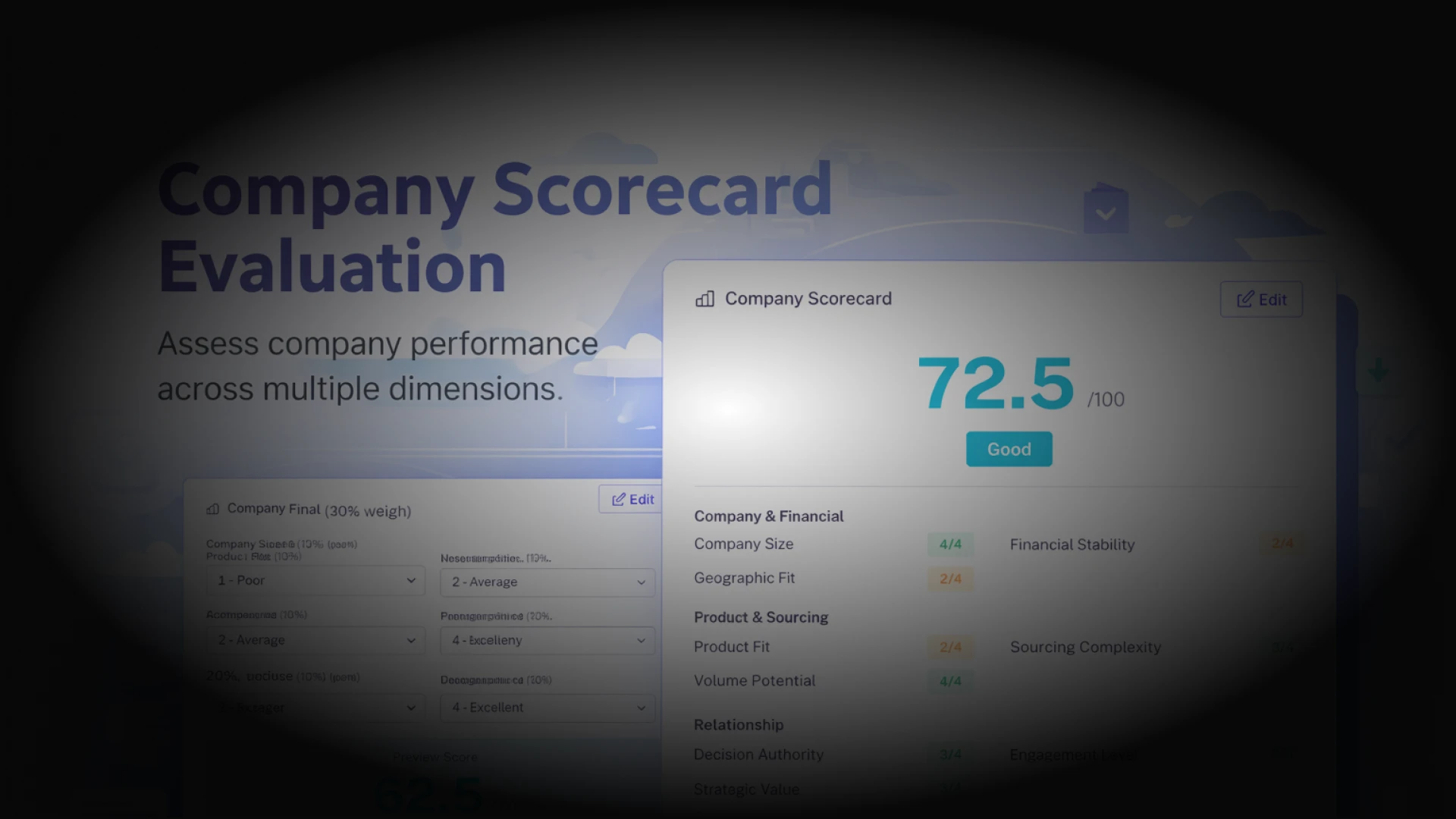
We designed a fully automated AI Lead Qualification Engine with a Company Scorecard. This intelligent
system evaluates every inbound company across multiple dimensions and delivers a deal-worthiness score
before the sales team makes a single call.
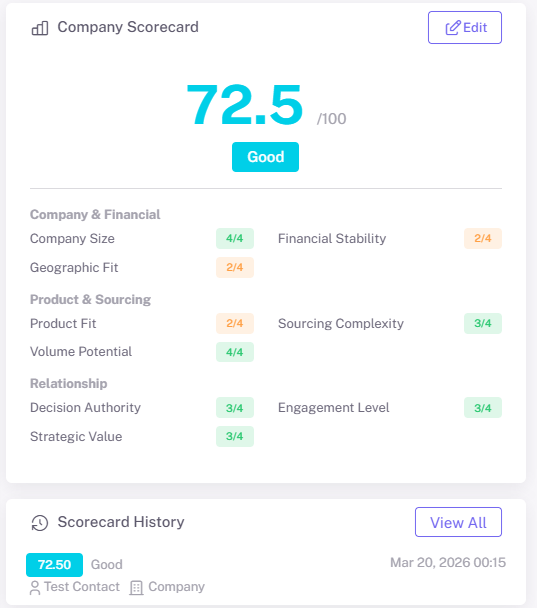
The Company Scorecard, AI Deal-Worthiness Engine
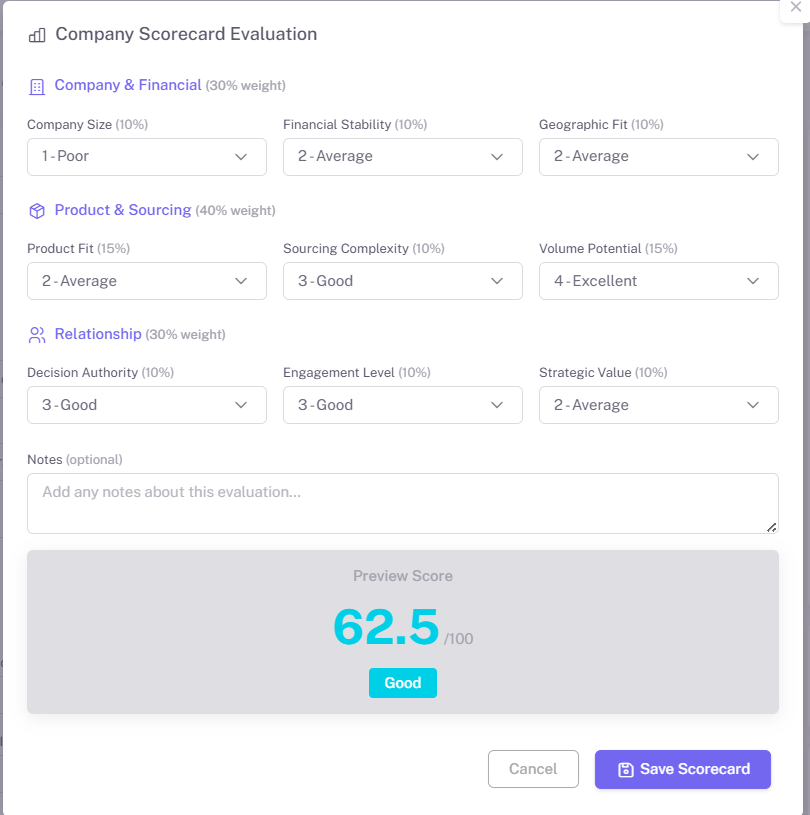
Every company that enters the pipeline is automatically scored /100 across three intelligence layers:
Layer 1: Company & Financial Intelligence
Can they afford us? Are they financially stable? Are they the right size?
| Signal |
How AI Evaluates It |
Score Weight |
| Company Size |
Firmographic data (employee count, revenue band) matched against the ideal customer profile
|
/4 |
| Financial Stability |
News sentiment analysis, funding history, Crunchbase/LinkedIn signals, payment behavior
patterns |
/4 |
| Geographic Fit |
HQ location, operating regions vs. target market match, expansion signals |
/4 |
Low scores here trigger automatic "nurture" routing; these leads don't reach the sales team until
they improve.
Layer 2: Product & Sourcing Intelligence
Do they actually need what we sell? Will the deal be complex? How big could it be?
| Signal |
How AI Evaluates It |
Score Weight |
| Product Fit |
NLP analysis of company website, job postings, and tech stack to detect alignment with
product use case |
/4 |
| Sourcing Complexity |
Number of stakeholders detected, procurement signals, existing tool stack (replacing vs.
adding) |
/4 |
| Volume Potential |
Company scale, department size, and usage pattern prediction from similar closed deals |
/4 |
The ML model here was trained on 18 months of the client's own CRM data, won deals, lost deals, and
churned accounts, to learn what "good fit" actually looks like for their product specifically.
Layer 3: Relationship Intelligence
Who are we talking to? Do they have power? Are they engaged?
| Signal |
How AI Evaluates It |
Score Weight |
| Decision Authority |
LinkedIn seniority detection, title NLP parsing, org chart inference (C-suite vs. mid-level)
|
/4 |
| Engagement Level |
Website visit frequency, pages visited, email open/click behavior, demo attendance, and
content downloads |
/4 |
| Strategic Value |
Brand recognition, industry influence, potential for referrals, case study potential,
network effect |
/4 |
A 4/4 on both Decision Authority and Engagement Level, like the example above, triggers an immediate
"HOT LEAD" Slack alert to the assigned rep, with a suggested call script generated by GPT-4.
Full System Architecture, What Else Was Built
Beyond the scorecard, the entire lead lifecycle was automated end-to-end:
1. Smart Conversational Web Form The website's contact form was replaced with a dynamic AI-driven
intake form. It adapts in real time, asking different follow-up questions based on each answer,
extracting richer data in fewer steps without feeling like a survey.
2. Automated Data Enrichment The moment a lead submits the form, the system silently enriches it
using:
- LinkedIn company data (size, industry, growth signals)
- News & sentiment APIs (recent funding, layoffs, expansions)
- Clearbit / Apollo for firmographic filling
- Website crawler to extract tech stack and product relevance signals
All of this happens in under 8 seconds before a human ever sees the lead.
3. ML Scoring Model Trained on 18 months of historical CRM data using a gradient-boosted classifier.
Inputs: 40+ features across firmographics, behavioral signals, and engagement history. Output: A 0–100
deal-worthiness score with a confidence rating and top 3 reasons for the score.
4. Scorecard Dashboard (Web App) A clean, real-time web dashboard similar to the scorecard UI above,
where sales reps see every company's score broken down by category. Color-coded badges
(red/yellow/green per dimension) make it instantly scannable. No spreadsheets. No guesswork.
5. Tiered Automation Workflows
| Score Range |
Label |
Automated Action |
| 75–100 |
Hot |
Instant Slack alert + GPT-4 generated call script + calendar invite sent |
| 50–74 |
Good |
Personalized email sequence (5-touch) triggered via HubSpot |
| 25–49 |
Warm |
Added to newsletter nurture + monthly re-scoring |
| 0–24 |
Cold |
Flagged for review; no sales time spent |
6. Intent Signal Monitoring (Post-Entry) Even after a lead goes cold, the system keeps watching. If a
"cold" company visits the pricing page 3 times in a week, the ML model re-scores them and can
auto-promote them to "warm," triggering a fresh outreach sequence automatically.
7. GPT-4 Personalized Outreach Generator. For every "hot" or "good" lead, GPT-4 auto-drafts a
personalized first email using the company's scorecard data referencing their industry, size, product
fit signal, and the specific pain point most likely to resonate. The rep reviews and sends in one
click.
8. Revenue Prediction Dashboard Using the pipeline data and historical close rates per score band,
the system generates a predicted monthly revenue forecast updated in real time as new leads enter and
scores change.
9. Continuous Model Retraining Every closed-won and closed-lost deal feeds back into the ML model
automatically via a nightly retraining pipeline. The system gets smarter every month without manual
intervention.