

Trusted by





AI Development Services We Deliver
We provide customized AI software development services across the full stack, taking each project from initial model selection through production deployment.
01.
AI Agent Development
AI Agent DevelopmentBuild AI agents that carry out multi-step workflows, call external tools, and retain context from one session to another. This method is intended for SaaS platforms and enterprise operations teams that have already established performance criteria.
02.
Generative AI and LLM Integration
Generative AI and LLM IntegrationIncorporate large language models into existing products and workflows using APIs or by employing self-hosted models; from the beginning, deal with prompt engineering, context design, and the validation of production output.
03.
Retrieval-Augmented Generation (RAG) Systems
Retrieval-Augmented Generation (RAG) SystemsSet up RAG pipelines so that large language models produce their responses on the basis of your data; the areas covered include document ingestion, the chunking strategy, the arrangement of vector retrieval, and the evaluation of the accuracy of the answers before they are deployed.
04.
ML Model Development and Fine-Tuning
ML Model Development and Fine-TuningConstruct and improve machine learning models by using data that is specific to the domain in order to achieve classification, prediction, and extraction; each model is provided with a documented accuracy baseline as well as a failure threshold.
05.
AI Workflow Automation
AI Workflow AutomationReplace the manual, rule-based processes with machine learning-based workflows which handle decision routing, document processing, and coordination between the various systems. The solution is one that is aimed at operations teams who need consistent and auditable outputs on a large scale.
06.
AI Product Development for SaaS
AI Product Development for SaaSFrom the very beginning, incorporate AI-native features directly into SaaS products, such as copilots, recommendation tools, and intelligent search, along with full backend integration and an evaluation framework.
Why Engineering Teams Choose Cypherox for AI Development
Most AI development projects come to a standstill between the prototype and production stages, and Cypherox eliminates that gap for SaaS companies, fintechs, and enterprise teams by offering a process that is designed right from the first discussion to satisfy production requirements.
Production-Ready Builds, Not Prototypes
Right from the beginning of each engagement we look at the production aspects. Before we write a single line of code we establish the criteria for evaluation, the possible failure modes, and the monitoring requirements.
LLM-Agnostic Architecture
Our AI systems are compatible with models from OpenAI, Anthropic, Mistral, and self-hosted models, so you avoid vendor lock-in at the model level and can adapt as models and prices change.
Built-In Evaluation and Red-Teaming
Before launching any AI system, we subject it to formal evaluation. Testing for hallucination rate, hostile inputs, and edge-case failure patterns is part of our standard procedure and not an optional addition.
Compliance-Aware Development for Regulated Industries
At every stage of building AI systems, from initial design through deployment, we address HIPAA, SOC 2, and GDPR requirements; data residency, access controls, and audit logging are essential to any compliance-related work.
Faster Delivery Than Enterprise Consultancies
Cypherox lacks the stages of governance which tend to slow down large consulting firms, and most projects progress from the discovery phase to a working prototype within four to six weeks, depending on the degree of integration complexity.
Projects
Our Projects
Year
2025
Role
Mobile App Development
Description
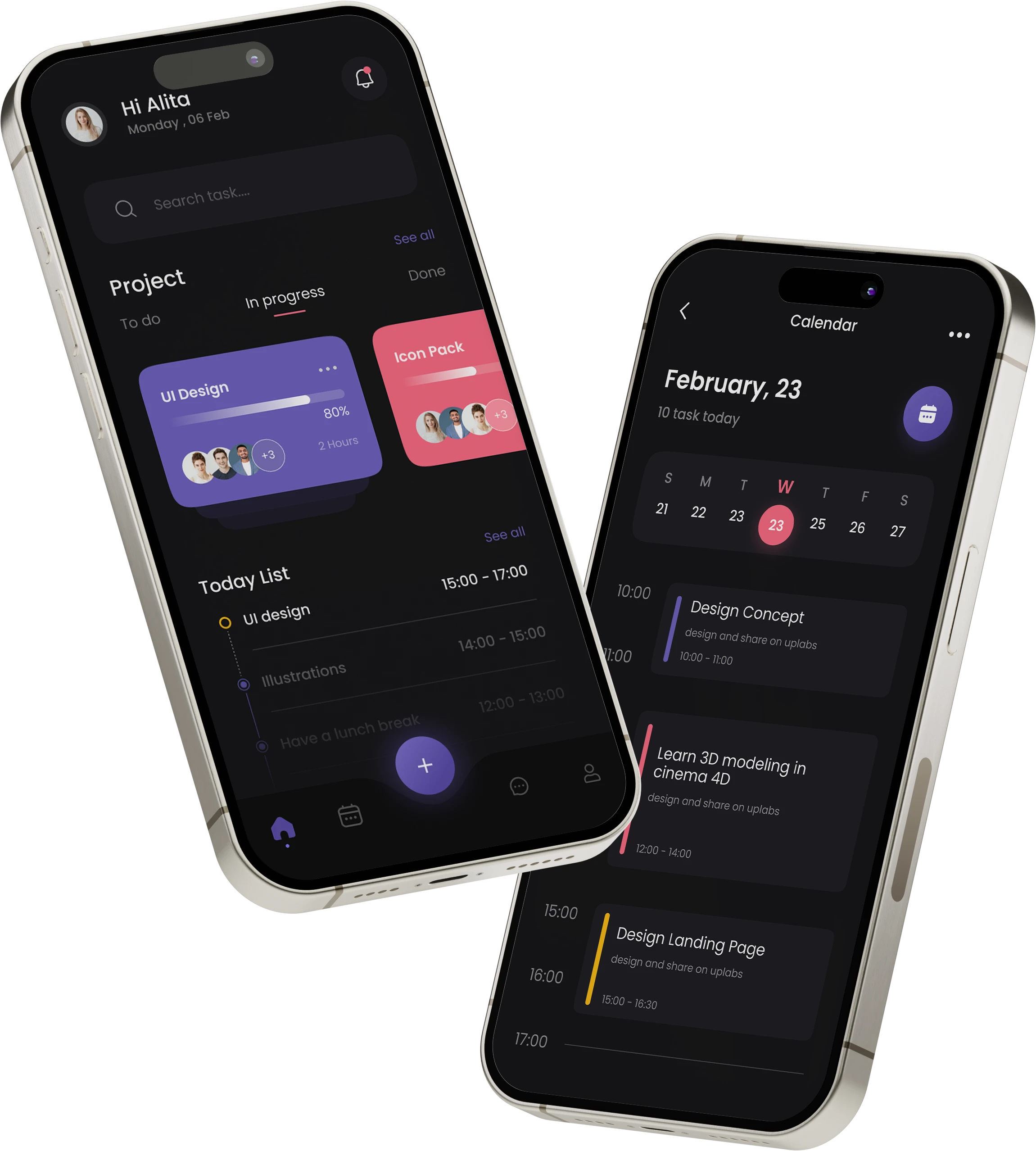
Appura is an elegant, high-performance mobile app designed for both iOS and Android.
All Projects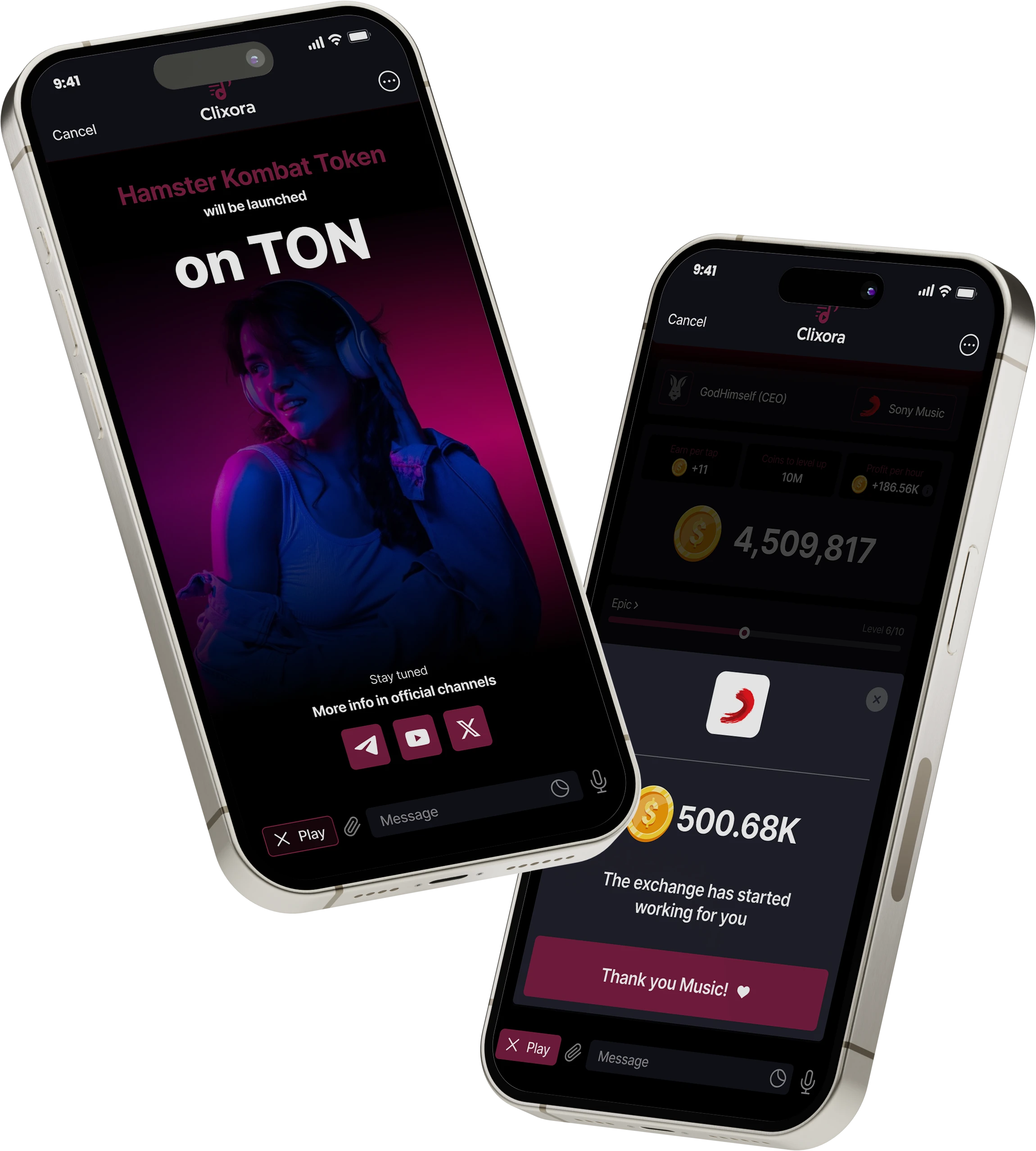
Year
2025
Role
Mobile App Development
Description
Clixora is a visually driven, cross-platform mobile app designed to help users capture, curate, and share their digital moments with style.
All Projects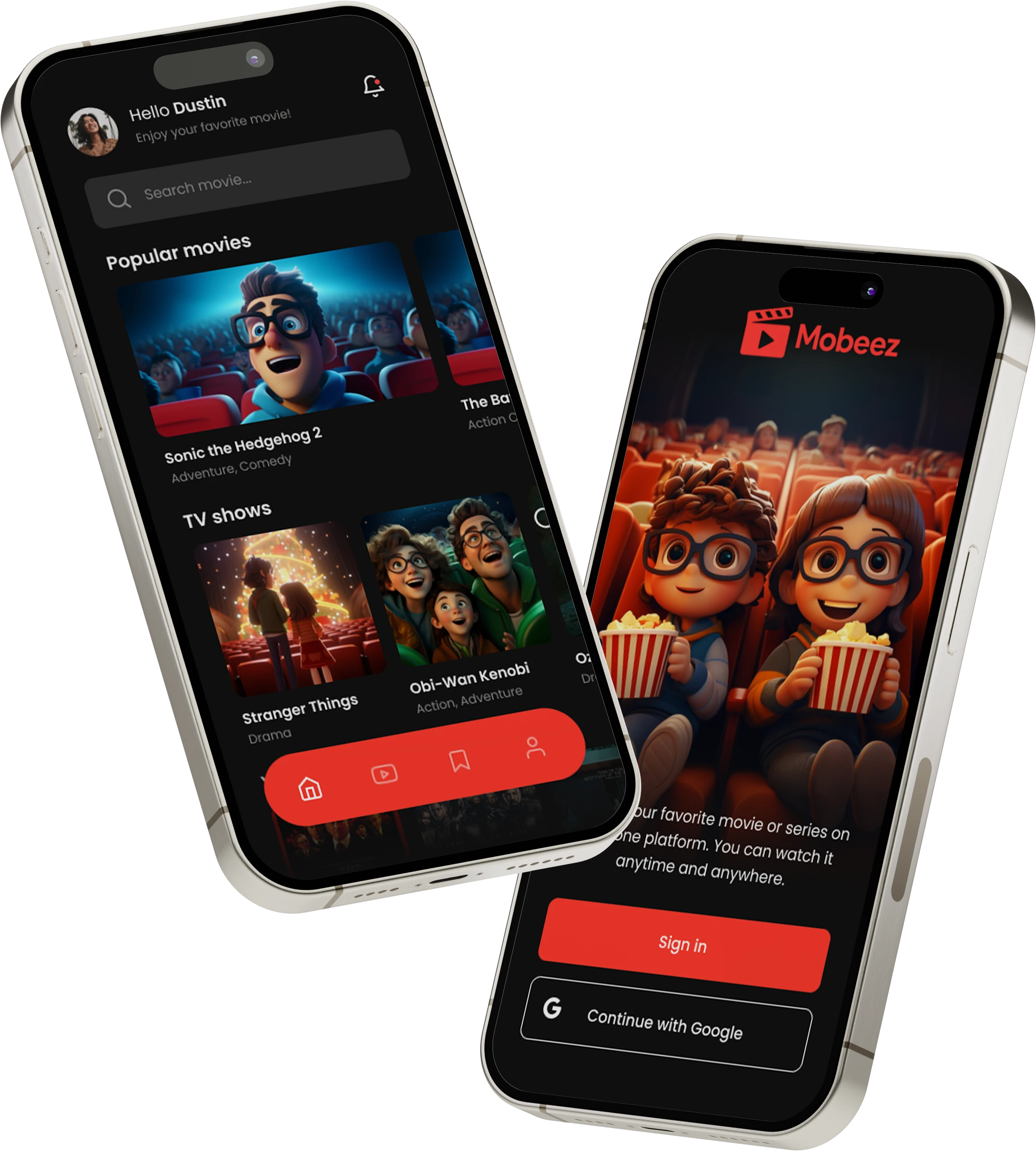
Year
2022
Role
Mobile App Development
Description
Mobeez is a dynamic, cross-platform mobile solution built to empower businesses with on-the-go service management and customer engagement.
All Projects
Clixora
Mobeez
Industries We Build AI Systems For
AI application development services have been offered in five sectors, in each of which the implementation of AI has had a tangible impact on operations and revenue. Since each sector has its own data requirements, compliance restrictions, and degree of integration complexity, this has led to our adopting a particular approach.
AI for SaaS Companies
SaaS companies include our AI co-pilots, onboarding assistants, and smart workflow features as part of their main product offerings, rather than treating them as add-ons.
AI for Fintech and Financial Services
We construct AI systems to provide capabilities in the areas of fraud detection, document extraction, and customer decision support, taking into account the security and audit requirements which fintech platforms have to meet.
AI for HealthTech
We create AI systems which automate medical workflows, interact with patients, and offer diagnostic assistance. When we are involved in healthcare AI projects, we include planning for HIPAA-compliant data administration and integration with the EHR.
AI for Logistics and Supply Chain
We offer AI systems which enable route optimisation, demand forecasting, and exception handling, and these are integrated with the live data pipelines that logistics platforms depend on in order to operate on a large scale.
AI for Mid-Market Enterprises
We offer mid-market companies operating in the sectors of manufacturing, insurance, and banking the opportunity to deploy AI systems which will automate their internal processes and reduce their reliance on manual workflows.
What Determines Your AI Development Cost
The cost of developing AI software is influenced by five factors, all of which have an impact on one another. If you understand these factors before deciding on the scope, you will be able to establish realistic budgets and prevent being surprised when the engagement starts.

Data Readiness and Preprocessing Requirements
Data that is clean, properly labelled, and easy to access cuts down on the time needed for AI development; data that is in its raw or unstructured form has to undergo preprocessing, which increases both the cost and the time before training or fine-tuning can start.
LLM Selection and API vs. Self-Hosted Models
The more production scale expands, the higher the per-token costs become for large language models based on an API. Even though self-hosted open-source models have greater initial infrastructure costs, they have lower ongoing operating costs for applications which require high volumes.
Integration Surface and Existing System Complexity
Any external systems that your AI system incorporates will result in more work having to be done during development, testing, and maintenance; integrations with complex legacy systems are by far the most costly and risky aspects in terms of time scale among all the factors in the engagement.
Evaluation and Monitoring Infrastructure
To detect model drift, measure output quality, and initiate retraining cycles, production AI systems need a continuous assessment infrastructure; this cost is an ongoing operational expense rather than a one-off build cost.
Team Composition and Engagement Duration
Builds that require extensive research need both ML engineers and software engineers. Although longer engagements with bigger teams result in a higher total cost, they generally reduce the risk of scope changes during the build.
How We Build AI Systems
How We Work
Our AI development process has six stages, taking us from problem definition to production monitoring. Before moving on to the next stage, each one has clearly stated inputs, outputs, and exit criteria.
Step 1
Discovery and Problem Scoping
Before considering any solution, we define the AI problem. This involves determining the decision the system will make, the data it will need, and the metric used to confirm it is working correctly.
Step 2
Data Assessment and Feasibility
Prior to writing the code, we assess whether the data that you currently have is adequate to support the AI system which you wish to build. We determine any gaps, quality problems, and preprocessing needs that might have an impact on the timeline.
Step 3
Model Selection and Prototyping
We select the most suitable model approach and build a working prototype; only after testing the prototype against your evaluation criteria do we proceed with further development.
Step 4
Production Architecture and Orchestration
We are in charge of designing the full system architecture, covering the orchestration logic, memory management, the methods for calling tools, and the fallback procedures should failures occur. The objective is to produce a system that remains reliable under real production conditions, not just with normal inputs.
Step 5
Evaluation, Testing, and Red-Teaming
Before allowing an AI system to go into production, we subject it to testing with hostile inputs, edge cases, and performance benchmarks; at this stage we also record and approve the hallucination rates and failure modes.
Step 6
Deployment, Monitoring, and Retraining
We will deploy to your infrastructure and install monitoring for model drift, output quality, and latency; the retraining triggers will be defined in the deployment plan and not be added reactively after the launch.
How We Staff Your AI Project
For Cypherox we form specialized project teams according to your particular AI engagement. The composition of the team will depend on the nature of the problem, the extent of integration, and the engineering capacity that you have at the beginning of the project.
Core AI Engineering Team
A standard AI build team has an AI engineer, a backend engineer who handles system integration, an ML ops engineer for deployment, and a QA engineer with experience in model evaluation. The roles can change based on the project's size and needs.
Engagement ModEngagement Modelsels
We have four engagement options: fixed-scope projects, time and materials, a hybrid model, and an offshore development centre which is intended for larger, ongoing AI programs. For details regarding each model, please refer to our engagement overview page.
Scaling the Team as Scope Grows
As the various phases of the project require it, we add more engineers, data scientists, or domain specialists. Instead of waiting until a phase is already underway and then making a reaction by increasing the size of the team, we plan the expansion of the team at the beginning of the engagement.
AI Technologies and Frameworks We Use
We look at the whole AI technology stack, beginning with foundation model APIs and orchestration frameworks and going on to vector databases, evaluation tooling, and production infrastructure; when it comes to selecting technology we guide our choices according to your requirements rather than adhering to standard preferences or existing relationships with vendors.
Large Language Models
We use GPT-4o, Claude, Mistral, Meta Llama, and Gemini. The models we choose are based on cost, latency, the accuracy requirements, and whether self-hosting is needed for data residency.
Orchestration and Agent Frameworks
We make use of LangChain, LangGraph, CrewAI, and AutoGen in order to handle multi-agent orchestration and complex workflow logic. The choice of framework is determined by the agent pattern and your system's state-management needs.
Vector Databases and Retrieval Infrastructure
Our retrieval infrastructure uses Pinecone, Weaviate, Qdrant, and pgvector and we choose the databases according to query volume, the embedding model, the hosting environment, and our cost targets.
Model Evaluation Tools
To assess retrieval effectiveness, answer relevance, and the hallucination rate we use Ragas, DeepEval, and our own evaluation tools. Evaluations are carried out before the system is deployed into production and ongoing monitoring is maintained after launch.
Deployment and Infrastructure
We use AI systems on AWS Bedrock, the Azure OpenAI Service, GCP Vertex AI, and on self-hosted Kubernetes clusters. The choice of infrastructure is based on your current cloud environment, your data residency requirements, and your cost model.
Backend and Integration Layer
We build integrations using Python, FastAPI and Node.js, and as part of each engagement we include API design, authentication, rate-limit handling and error logging.
Reviews
Appreciation From Clients
"Incredible Collaboration!"
"Our journey with Cypherox Technologies was exceptional. Their dedication to understanding our needs and translating them into a stunning app was commendable. Kudos to the team for their professionalism and top-notch delivery!"

"Exceeded Expectations!"
"Cypherox not only met our expectations but surpassed them. Their attention to detail and commitment to quality shone through in every phase of app development. Thanks for bringing our vision to life!"

"A True Partner!"
"Working with Cypherox Technologies was like having a supportive partner throughout the entire process. Their proactive communication and unwavering support made the app development journey smooth and enjoyable. Highly recommended!"

"Outstanding Results!"
"Choosing Cypherox was the best decision we made for our app development. Their expertise and dedication led to outstanding results. We're thrilled with the final product!"


Hire AI Experts
Hire Dedicated AI Developer
You have the option of employing AI developers and ML engineers from Cypherox to work with your engineering team on a full-time, part-time, or project basis. None of the arrangements require a minimum contract term.
Connect With Our TeamFAQ
Frequently Asked Questions About AI Development Services
What are AI development services made up of?
The entire build process is part of the AI development services and includes problem scoping, data preparation, model selection, system architecture, evaluation, deployment, and production monitoring. The extent of the scope will vary according to the engagement and may involve either a single AI feature or a full multi-agent system.
What is the difference between the development of AI and that of ordinary software?
Unlike traditional software, AI systems require their own evaluation phase. You have to define what a correct output should be, check for hostile inputs, and keep an eye on model drift once the system has been launched. These steps do not have a counterpart in a normal software build.
What do we need to prepare before we begin an AI project?
The key factors are a clearly defined problem, a record of the data sources, and a metric which confirms that the system is working; having clean and accessible data reduces the time taken during the discovery phase and decreases the chance of scope changes while the system is being built.
Are you using a particular LLM or are you indifferent to the model used?
We are independent of any particular model; we use models from OpenAI, Anthropic, Mistral, Meta Llama, and Gemini, and we host open-source models ourselves when data residency or per-token costs at scale make that necessary. We choose models based on your requirements.
How long does a typical AI development engagement take?
A focused AI feature with clean data and a defined scope typically takes six to twelve weeks from discovery to production. Multi-agent systems or projects with significant data preparation needs take longer, typically twelve to twenty weeks.
How do you handle hallucinations and output failures before production?
We run formal evaluation at the prototype stage and again before production clearance. This includes accuracy benchmarking, adversarial testing, and documented failure modes. Every system ships with a defined hallucination threshold and a monitoring plan.




Contact
Talk to Us